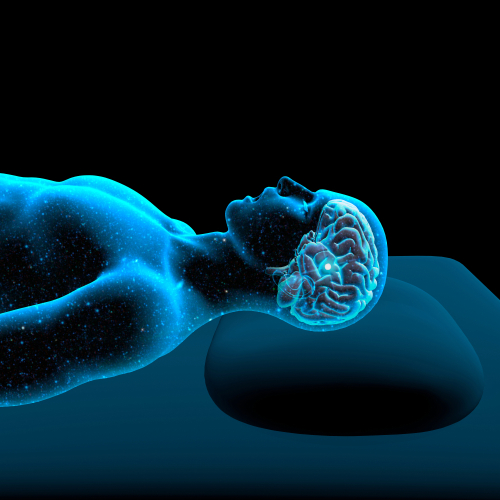
Did you know your brain cleans itself when you sleep? While you’re snoozing, your brain cells shrink, and the resulting extra space allows a clear fluid called cerebrospinal fluid to flow in, wash through the brain, and carry waste away. Some of the same waste proteins, in fact, that pile up with Alzheimer’s disease: amyloid and tau. Scientists call this cleaning system your glymphatic system (like what the lymphatic system does for the rest of your body). It’s an effective and brilliant process when we allow it to happen, but the problem is that many of us don’t. How do we interfere in this nightly process (and it does only happen at night, by the way)? By not getting enough sleep. In the 1940s, only about 3% of the U.S. population got less than 5 hours of sleep. Today, it’s about 20%. Living life sleep-deprived can reduce memory, slow your thinking, and even increase your risk of developing Alzheimer’s disease.
Sleep runs through repeating cycles of around 90 minutes each. During the deepest stage called N3, brain activity slows, cells shrink, and cerebrospinal fluid washes in between cells and washes the waste away that builds up during the day. Even one night with inadequate sleep (we need 7 – 9 hours) leads to significantly higher levels of toxins in the brain. So, your brain doesn’t just rest at night; it’s taking out the trash. And the timing of that cleaning matters a lot. Those deep-sleep cleaning sessions happen mostly at the first half of the night, with cleaning ending almost entirely by morning. When you stay up late, you aren’t just cutting into your rest and recovery time (which is also super important), you’re interrupting your brain’s cleaning schedule and allowing toxic loads to pile up. The bottom line for health: make sleep a priority. At least an hour before bed, turn off screens that trick your brain into thinking it’s still daytime, thus increasing stress wear and tear and interrupting the cleaning schedule. Just how important is sleep? Well, research has shown that consistently getting less than six hours of sleep results in a 30% higher risk of dementia, and poor sleep quality raises your risk of getting Parkinson’s disease by 70%.
Another important note: your glymphatic system naturally slows down with age, so this makes sleep even more important the older we get. A slower cleaning pace means we actually need more sleep to get the job done. And one more thing that affects this brain cleaning process…water intake. If you don’t drink enough water, your body simply doesn’t have enough fluid to flush the brain thoroughly. So, make sure you get the recommended amount of half your body weight in ounces of water daily (150-lb. person needs 75 ounces), just do it early enough in the day that you don’t interrupt your sleep with multiple trips to the bathroom!