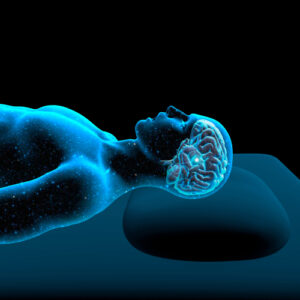
Fatigue rarely arises from insufficient sleep alone, but more often from a chronically overburdened nervous system. In this context, exhaustion is seldom an isolated symptom; rather, it reflects a deeper systemic imbalance. It typically develops gradually and affects not only subjective energy levels, but also fundamental regulatory processes at the cellular and neurological levels, with potential long-term consequences for overall health and resilience.
Many attempt to create more balance while they still can: they eat healthier, meditate or practice yoga, take vacations, reduce appointments, exercise. And yet, deep recovery does not occur. Often, we become ill precisely when we are supposed to be resting—on vacation, on weekends, or after periods of intense strain.
The feeling remains that the inner batteries of vitality can no longer truly recharge or return to a stable equilibrium. The cause often lies not in a lack of rest, but in a diminished regulatory capacity of the body at the neurological and cellular levels.
When Sympathetic Nervous System Activation Becomes the New Normal
A healthy nervous system is flexible. It can activate and release, focus and relax, respond and regenerate. This dynamic interplay between the sympathetic (activating) and parasympathetic (relaxing, regenerating) branches of the nervous system forms a central foundation of long-term health.
With chronic stress often subtle and persisting over extended periods, this flexibility gradually diminishes. The causes are not limited to heavy workloads, time pressure, or constant sensory overstimulation, but also include ongoing emotional strain and unresolved trauma. The nervous system adapts to this state of heightened activation, so stress is no longer consciously perceived as such; it becomes the new internal baseline. It reveals itself, among other ways, in the inability to truly relax inwardly or to simply “do nothing.”
The autonomic nervous system thus remains predominantly in a state of internal activation, regardless of whether we are working, resting, or sleeping. When the body rests but the nervous system remains alert, inner tension no longer fully dissolves. We are simply “always on.”
Exhaustion Runs Deeper Than We Think
This persistent activation within the nervous system extends down to the cellular level. Every cell in our body is a bioelectrical system. Cells depend on a subtle electrical voltage across their membranes, known as the membrane potential. This voltage is essential for cells to efficiently process signals, absorb nutrients, eliminate waste products, and communicate with one another.
Chronic stress, persistently elevated cortisol levels, and reduced parasympathetic activation impair cellular energy supply and ion regulation. As a result, the membrane potential of cells may decrease. Signaling processes slow down, the transport of nutrients, minerals, and electrolytes becomes less efficient, and metabolic byproducts are removed less effectively.
Mitochondria—the power plants of the cell—are particularly affected. Their ability to produce energy in the form of ATP is directly linked to stable electrical charges. When charge potential declines, energy production decreases, and repair, rebuilding, and regenerative processes are downregulated.
At the same time, the nervous system itself becomes less flexible. It responds more quickly with tension, buffers stress less effectively, and returns less frequently to states of deep rest. Cellular adaptability and neural flexibility together form our regulatory capacity.
Why Rest Alone Is Often No Longer Sufficient
When this capacity is compromised, the consequences appear gradually but clearly: tissues regenerate more slowly, stress is compensated less effectively, emotional reactions intensify, and sleep loses its restorative quality. Over time, physical illnesses may also develop, including cardiovascular conditions such as hypertension, chronic inflammatory processes, allergies, autoimmune disorders, or reduced immune function.
At this stage, many conventional recommendations fall short. More sleep, more exercise, or more mindfulness can only be effective if the nervous system still retains sufficient regulatory capacity and if adequate cellular energy is available to initiate repair processes.
True regeneration therefore requires two essential prerequisites: sufficient cellular energy and successful activation of the parasympathetic system, allowing the body to shift from activation mode into regeneration mode.
The Energy Enhancement System: Enabling Regulation, Experiencing Regeneration Anew
This is precisely where the Energy Enhancement System comes in. The system generates a highly ordered, coherent field that provides the organism with both cellular energy and clear informational impulses for regulation. Without actively intervening in bodily processes, it creates the conditions—through frequencies, light, and information—under which the cell membrane potential can normalize and self-regulation can become possible again.
At the cellular level, the EESystem may help stabilize electrical order. Exchange of substances, signal transmission, and energy production become more efficient; ATP production can recover. At the same time, the EESystem exerts a regulatory influence on the nervous system. Effective activation of the parasympathetic branch and the shift into slower brainwave states signal safety to the body down to the cellular level, allowing the system to truly let go.
Many people experience this as a profound internal release of tension and a return to inner calm and order—not because something is being “done,” but because the body gains access to the precise energy and information it needs to reorganize itself.
How We Come Back “Into Order”
True regeneration begins where the nervous system once again senses safety and the cells have sufficient energy available. Then healthy regulation can return, the body can rediscover its natural rhythm of activity and recovery, and we can come back “into order” from within.
The EESystem provides a unique bioactive energetic space through precisely calibrated biophysical fields—an environment that can feel like an untouched place in nature, free from disruptive influences and rich in positive regulatory forces. Through specially developed, non-invasive technology in the field of frequency and light therapy, natural regulation at the neurological level and regeneration at the cellular level can become possible again.
At Good Vibrations Energy Center we create a space in which healthy self-regulation can re-emerge—not through pressure, stimulation, or manipulation, but by providing exactly the conditions under which the organism can reorganize itself and restore its biophysical potential. Because without functional self-regulation, there can be no sustainable regeneration. And without regeneration, there is no long-term health.
If you sense that recovery alone is no longer enough, it may be worthwhile to consider the importance of true cellular regeneration and deep nervous system regulation offered by time spent with the EESystem technology.
This blog was written by Aarti Mona Bremen, an EESystem Center Owner from Germany.